Category: Uncategorized

Ashes, ashes, we all fall down

Last night my husband and the sons and I watched a movie about The Black Death (not a cheery movie, by the way – nearly everyone dies, and those who don’t, live as though they had). I knew going into it that the dramatization of something so horrible would be horribly dramatic, but I was reminded, each time I turned my eyes away from the horrors on screen, that when the planet seems to turn on us, all eyes to turn to the planet’s Maker. Even those who never cast a reverent thought toward God on an ordinary day want an explanation when calamity falls like a divine sledge hammer.

Live long enough and you will discover there are some questions so big that the answers are surely bigger still, and likely less understandable than even the questions. I don’t think that means we need to stop asking big questions. That’s what writers like me do all day long. The thought of asking little questions that no one really cares about is a sad one. Asking implies a quest for knowledge; reveals that we know that we do not know it all.

The unfortunates who suffered the Plague didn’t know what we know now about fleas and rats and airborne bacteria.  The answers they demanded of their Maker were right in front of them but they lacked the knowledge to see them. I find that highly revelatory. If there were answers to our deepest questions seven hundred years ago, obscured only by our limitations, surely there are answers to our deepest questions now, hidden from us not by a vengeful and capricious Maker but because we do not know all that He knows.

Last night’s movie reminded me of a book by Geraldine Brooks that I love and have read three times. A Year of Wonders is Ms. Brooks’ exploration of one woman’s humanity as she grappled with the calamity of plague.  The main character realizes the limitations that send us scrabbling for guidance. She says this on page 62: ‘If God saw fit to send this scourge, I believe it would be His will that one face it where one is, with courage, and thus contain this evil.” 

I love that. It is the asking of a Big Question. I like it that she begins the question with “If God,” because we don’t always know what He sends over what He allows. This speaks to our limitations, not God’s. And I like that somehow she wishes to extract something noble – the exercise of courage – out of adversity.

All that we didn’t know in the Middle Ages explains why the Plague could do what it did. All that we don’t know right now – and wish we did – will one day explain something, too. We just don’t know what it is yet. I doubt the survivors of the Plague comforted themselves by saying, “Someday we will understand why this happened.” But the truth is, we do understand why it happened. The knowledge we’ve attained regarding fleas, rats, and airborne bacteria tells us why. The infinitely bigger question of why God let it happen I know I haven’t the knowledge to address.


So in the meantime, courage keeps us from shaking an angry fist at God, walking away from Him and turning our backs on wisdom. 

We all fall down at one point or another. It is the nature of gravity to do that to us when  circumstances topple us. I am very glad we figured THAT out. It is likewise the nature of humanity to get back up when we’ve fallen and seek the answers to what made us fall. Glad we figured that out, too.

Interestingly enough, that’s how we learn what we did not know before. 

Pretend it’s Friday. . .

Today is Photo Phriday on Monday. These are the pictures I was going to post on Friday but then I had that mind-bending encounter at the Fair and the photos were pre-empted. I am a big fan of cactii and succulents.They are the most amazing plants. Hearty and delicate, impressive and stoic, ready to defend, ready to nourish. My husband and I planted a new garden behind the house recently and here are the new friends who make their home there. Enjoy . . .


Time unfolded

I love time travel stories. I don’t know why. Maybe it’s the crazy idea that we could possibly change the past or impact the future that appeals to me – it’s audaciously amazing. Thrilling. Mystifying.

I loved the movie Somewhere in Time with Christopher Reeve and Jane Seymour – I’ve probably seen it a hundred times – as well as Guy Pearce in H.G. Wells’ Time Machine.  I grew up reading L’Engle’s A Wrinkle in Time and as an adult, The Time-Traveler’s Wife left me pondering the notion of how frustrating it would be if time were not constant.

So when I read in the San Diego Union Tribune this morning the headline that there will a series of lectures at USD to discuss “provocative science,’ and among the topics, “Reversing Time,” I had to read on. First, I simply had to know what provocative science was. Don’t you want to know? I Googled “provocative science” and was unhappy with the results. Even Dame Wiki doesn’t seem to have a page on it.  About.com doesn’t either. It appears from cursory glances at my hodge podge of search results that ‘provocative science” – and please someone correct me if I am wrong – is purposeful pondering on hypotheses we can’t yet prove. Such a definition doesn’t exactly make it science but undoubtedly has the potential to  provoke some interesting conversations, dontcha think?

Some of the lectures are free and open to the public, but not the one on reversing time, dangnabbit. The UT says that not only do some scientists believe it is possible to reverse time, “they’re trying to develop experiments that would prove their theory, undermining the Second Law of Thermodynamics, one of the most important principles in science and engineering. ” Yikes. The lecturer believes the future can influence the past. Yikes yikes.  There are a great many things in human history I would love to see undone. The Holocaust, the sinking of the Titanic, the terrorist attacks on 9/11, just to name a few. It is heady to think there might be a way through human endeavor to thwart past undesirable human endeavor. I am not even sure if this what these scientists believe.

But if it is. we have ask ourselves the great line from Jurassic Park (a fine Hollywood example of what happens when you to try to fix something that should’ve stayed broken) spoken by the annoyingly dear Dr. Ian Malcom: “Your scientists were so preoccupied with whether or not they could, they didn’t stop to think if they should.”

It’s interesting that if you look up the word “provocative” on dictionary.com, this adjective is defined first as stimulating and then degrades from there to irritating to vexing.


I think we might possibly be vexed with our results if we found a way to change the past. We might be smart enough to find a way to do it but I don’t think we are smart enough to make the past perfectly suited for the future that awaits it. Plus, sooner or later someone in the future would look at the past which we had manipulated and declare it deficient. And so on and so on.

God has granted some people tremendous intellect. Physicists who can imagine the imaginable amaze and, at times, astound me. But with knowledge there must also be wisdom. They are two different things. I don’t see God manipulating the past and He could do it with a mere word. Seems to me there is wisdom in that, along with knowledge.

We should not look back unless it is to derive useful lessons from past errors, and for the purpose of profiting by dearly bought experience. ~ George Washington

A Dozen Lessons from Jane Austen

Today Literary Critic Bill Deresiewicz has a lovely summary of the 12 life lessons Jane Austen reveals to us in her collection of novels (which you can read right here and you surely should), including this one:

 #5 Don’t believe everything you think
“We do not come to things with open minds, we come with all the ideas we’ve already acquired, and we can’t wait to project them onto everything we encounter. Instead of discovering the truth, we end up with a very elaborate theory that bears no relationship to what’s actually going on in front of us.”

And this one:


#7 Too much money makes you miserable

“Being able to get whatever you want makes you awfully unhappy when you can’t get what you want. And if everything is easy, then nothing really matters.”

Missed the link? Here it is again:

Enjoy . . .

Tribute to a Good Dog


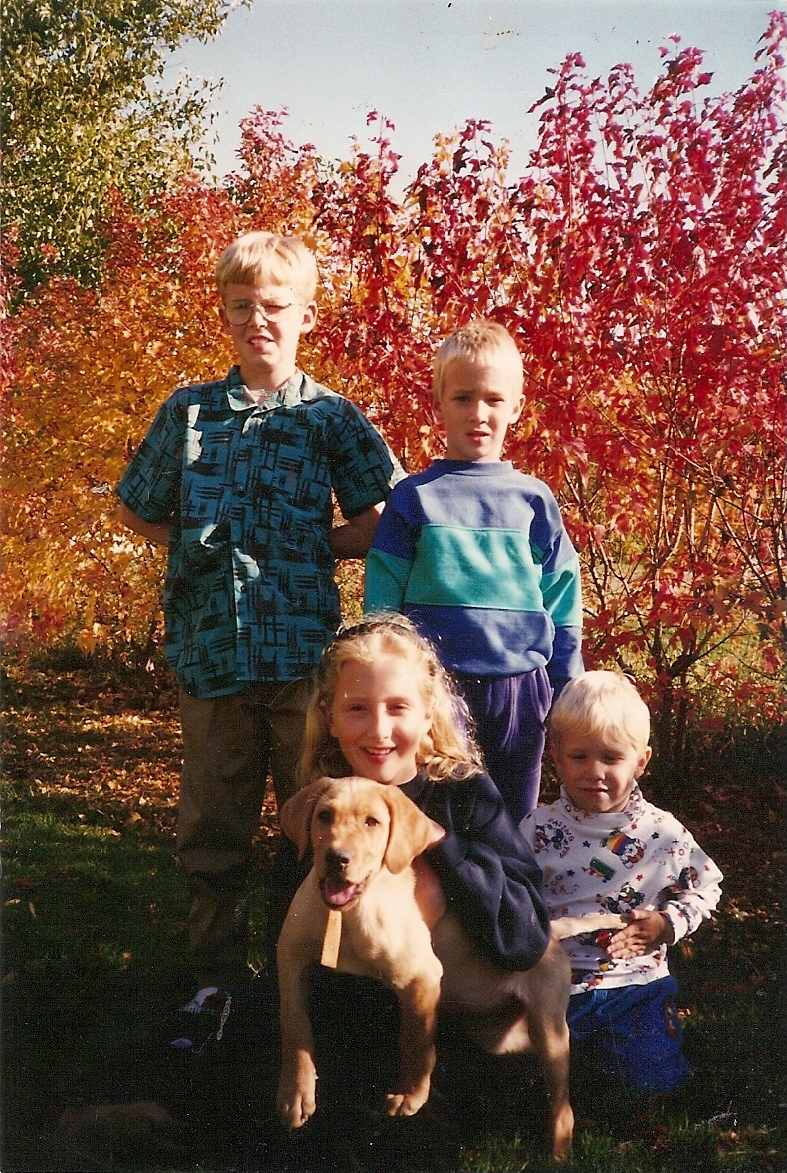
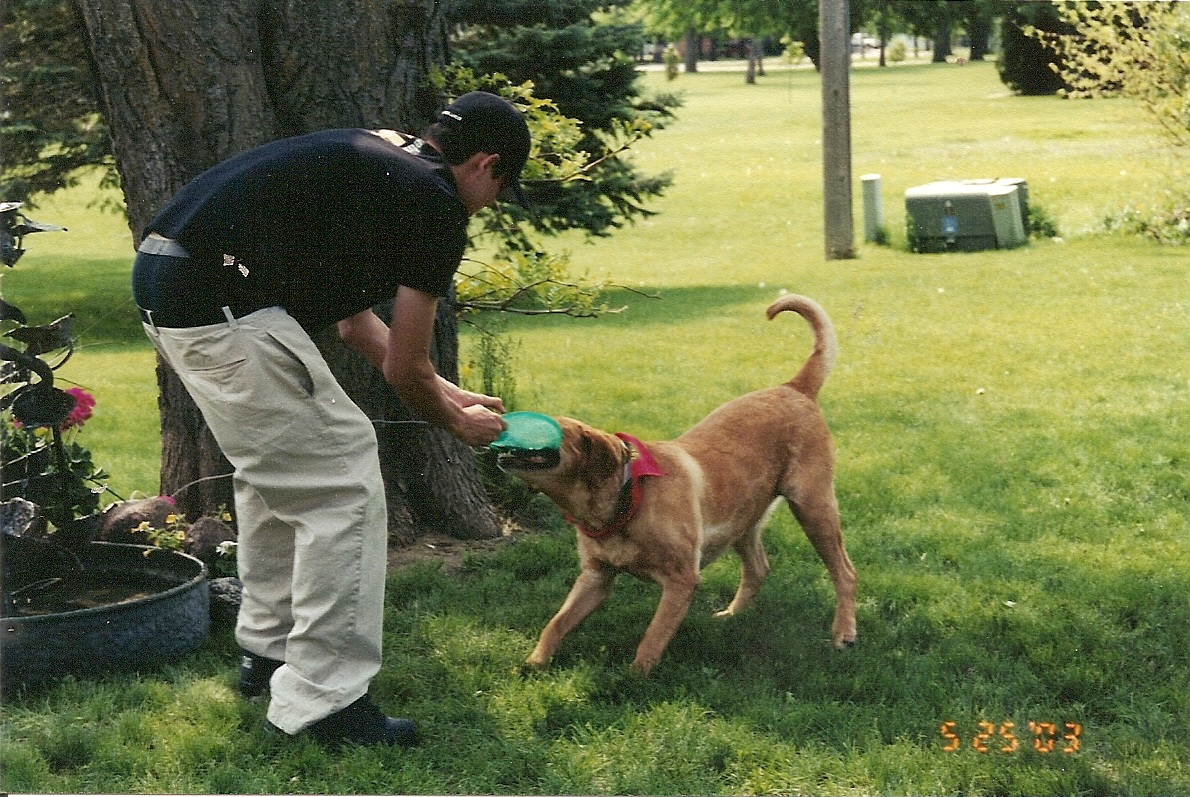
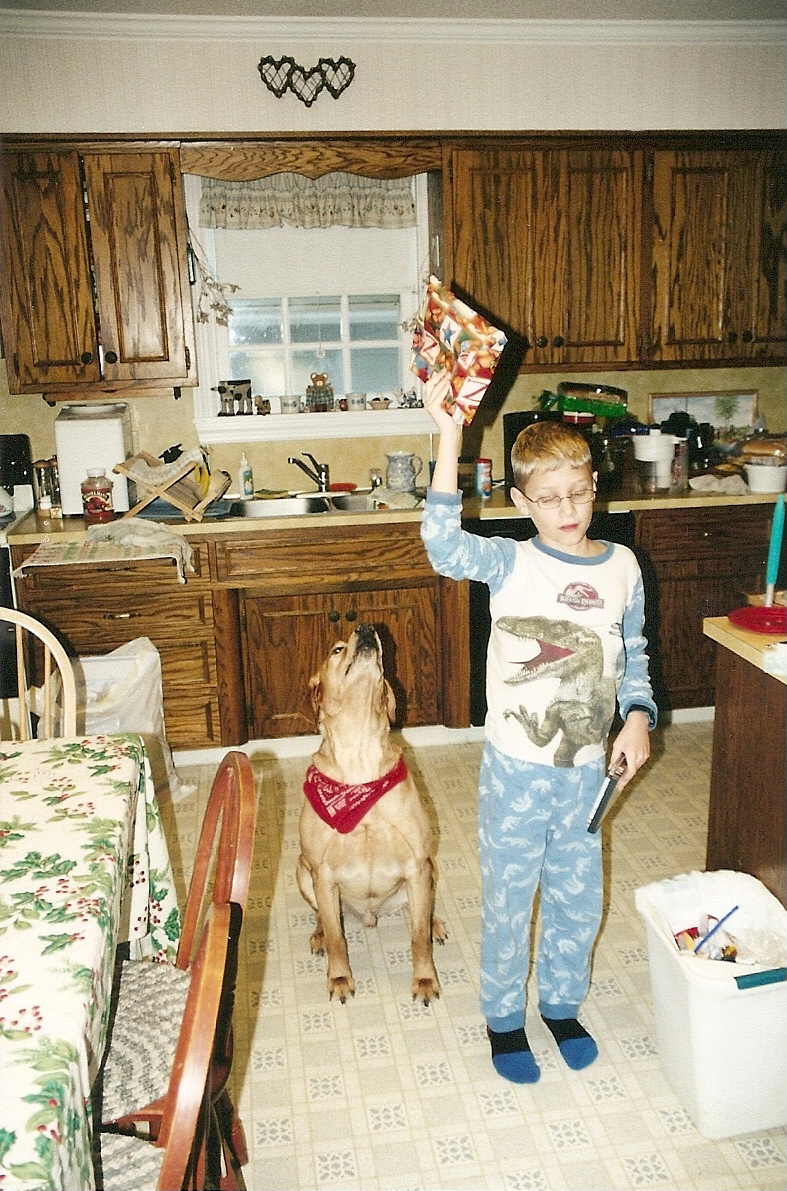
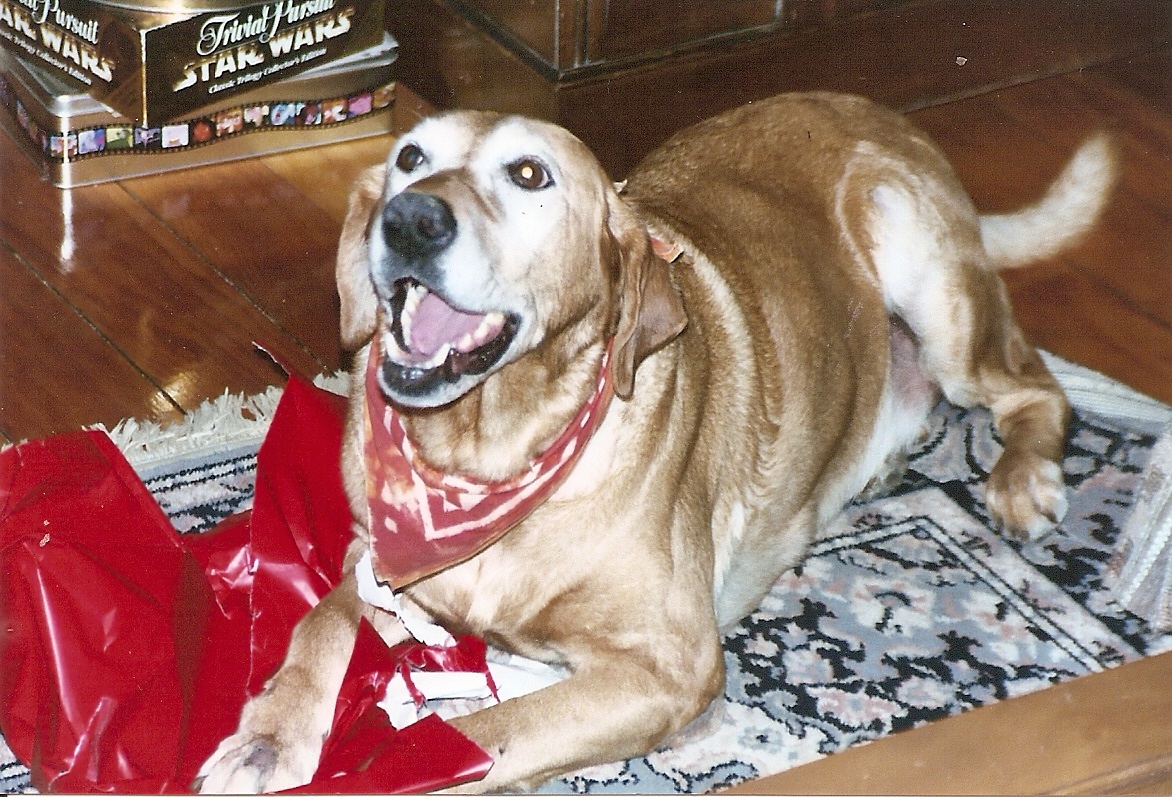
Today I share a few photos of our dog, Luke, who passed away on Tuesday at the age of 14½. He was what many dogs spend their lives being – supremely devoted, unwilling to carry a grudge, happy to see you at any moment of the day or night, uncritical of your faults, content to lie at your feet at the end of the day, ready at a moment’s notice to go Outside. 

He was there for the lion’s share of the parenting years, he played a lot of Frisbee, barked at a lot of snow shovels, sniffed many a tree, claimed even more, opened Christmas presents – his own and those belonging to other “people” – with reckless abandon. He deftly played a game we called Mysterious Banana (if you insist on an explanation, I will give you one), he chased lizards and squirrels (obviously undaunted by the knowledge that in his lifetime he never caught one), loved apples and carrots, and stole the cat’s food whenever we weren’t looking. He stepped in paint once and left his paw print in the driveway and it is there still, dear to me now. He loved to chase and chew empty milk jugs and he once tried to stuff three tennis balls in his mouth. If you threw a dirt clod he’d retrieve it. His paws twitched when he dreamed and his ears felt like velvet. No matter what I had done or didn’t do – he always wagged his tail at my approach. Always.

The only fault good dogs have is they don’t live long enough, though I suppose this is one reason it is forgivable that they don’t; so that we would be reminded of how wonderful they are and how we should aim to be a little more like them: Loyal, nonjudgmental, forgiving, compassionate, ready to drop everything and just go Outside . . .

“Near this spot are deposited the remains of one who possessed Beauty without Vanity, Strength without Insolence, Courage without Ferocity, and all the Virtues of Man, without his Vices. 
This Praise, which would be unmeaning Flattery if inscribed over human ashes is but a just tribute to the Memory of Boatswain, a Dog.
~ Lord Byron

Scattered and troubling thoughts filled my mind as I stood at my dwarf lemon tree this morning – the loss of life in Japan, the incongruity of the trickle of a surge that made its way across the Pacific from Asia and which barely interrupted our morning coffee, my own personal woes.


The branches were bowed with the weight of their fruit and here and there a new white blossom peeked around the yellow orbs – promises of things to come. 


As I plucked and pulled and pondered, the air around me became sweet and the red bowl in my hands sent up wafts of fragrance as I filled it.  Lemons smell impossibly sweet when you pick them. You’d never guess inside that sunny yellow exterior are sections of sour that will set your teeth on edge. On the outside, they smell like candy.


The inside of a lemon, useful as it is for so many things, is not the same thing as its outside. You can’t describe a lemon by saying it is sour and hey, that is all it is. It is a remarkable blend of both make-you-cringe-intense and make-you-sigh sublime. It depends on which part you are experiencing.


Rather like life. If all I wanted to see today was make-you-cringe intense, there is plenty of it. But that is not all Today is. There is beauty, too. Life is also a remarkable blend of bitter and sweet. 


You know that old saying, if life hands you lemons, make lemonade? I’d like to say instead if life hands you lemons, fill a red bowl with them, hold them close to your face and breathe in deeply. There is sweetness there. It is not where you think it should be, not on the inside. It’s in another place.


But it is there. . .

Last night’s Oscar win for Colin Firth, a most-deserved one in my opinion – I loved The King’s Speech – made me think back to the first film I saw with Colin Firth as a cast member. Do you remember the Hallmark production of A Secret Garden?  If you were the parent of a little girl in the late ’80s like I was, you no doubt remember it quite well. You probably saw it a dozen times like I did. And while some of the lines got a little old, you still laughed out loud when Mary Lennox quipped: “If we were in India I’d put a snake in his bed.”

The talented Colin Firth is only in the movie for a mere two minutes, and those include the shots of him as the credits start to roll, but still, he portrayed the grown-up Colin with perfect precision, way better than the lovely but mismatched maiden who pretends to be grown-up Mary Lennox and who looks nothing like the young actress who plays her in childhood. (What was the casting director thinking?)  I remember sitting with my young daughter – many times over – watching the last few minutes of the movie and marveling at how much the young man with the war injury (Colin Firth) resembled the young actor who played the same character in the childhood years.

So of course this morning I scared up a YouTube video of that scene. And as I was watching, I noticed something I had never noticed before in all those previous viewings. Something I daresay I was not supposed to notice.  How in the world did I miss it? I can’t  help but throw out the challenge to you.  Do you notice it? Tell me! 

It takes days upon days for an orange to become an orange. It begins as a  bridal-white bud imbued with an intoxicating scent. Time, sunshine, time, water, time -these in unhurried fashion are what coax the bud into this sweetly dimpled orb.
There’s nothing quite like a glass of freshly-squeezed orange juice and yet most of us are content enough to grab a bottle of Simply Orange out of the fridge on busy mornings. But lately I have begun to crave the real deal. And so I have taken advantage of having a family of orange trees on our property and have begun to pick this year’s harvest to make juice in the mornings.
Convenience makes life easier but it robs us of the appreciation we should have for the beauty and treasure of raw creation. It is convenient to grab stuff out of the fridge, like orange juice, but oh the things we miss when we do: the walk down the hill to get the oranges, the dew on your shoes, the smell of wet grass, the sound of birdsong above your head, the blast of fragrance when you cut the orange open and it bleeds sticky sweetness over your fingers.

You have to exert some effort to squeeze your own juice without the aid of conveniences. And you have to realize you will need to cut up more than one orange for a cup of juice. Several, in fact. And it will take a few minutes.

Three oranges later I had barely six ounces. And I downed this cup in five seconds. But oh oh oh oh  – the taste. I would describe it here but it would be like trying to describe chocolate to someone who’s never had it. It took months for those oranges to grow and I consumed them in mere minutes. But that is not the point. It’s not how long it took to make this juice and how quickly I consumed it, it’s how personal the experience was and how sweetly memorable. . .

Tenacious and tender


I’ve a lovely treat coming up for
you you, beginning on Friday of this week. My ninth-grade English teacher, Frank Barone, and I get together now and then then for coffee and booktalk. He’s retired now but he still loves the power of story. A couple weeks ago when we got together, I asked him if he would let me interview him for my blog. He said yes! I will post the first installment of his answers to my questions starting on Friday the 10th!
In the meantime, here are just a few photos from my recent trip to Mexico. I love love love cacti and succulents. They are beautiful and dangerous, engaging and off-putting, amazingly resilient on the outside and soft as gelatin on the inside. Enjoy . . . (and see you on Friday!)

Basket Case

A few days ago, I went disc golfing for the first with my very patient coach, tutor and son. Like anything that involves aim, a flying object and a receptacle, there is an art to disc golf. You can’t just fling the thing anyway you please and expect to hear the lovely rattle of clanging chains.

You have to hold the disc just so. You have to have a proper thrust and sweep to your throw. You have to let go at the right time. You have to practice.

I wasn’t a total loser on the course. I stopped keeping track of my score when it was obvious it didn’t matter. I learned a few things about what not to do. And I got a little better with every throw. But of course sometimes I would make a huge digression and chip the disc in the netherworld of the rough and it was almost as if I was taking my first shot all over again. Frustrating, that.

Along about Hole 5, we were getting ready to throw our discs and the strangest of moans floated across the grass to our ears. A pathetic lowing like I’ve never heard. Animal and yet not. Human and yet not. We followed the source of the sound with our eyes and there on the grass some 30 yards away was a woman – or maybe a man – writhing and wailing – like a toddler who wants his way and hasn’t yet learned sometimes you just don’t get it.

We worried for a moment that this person needed a 911 call. But there were two people standing over him or her, their hands on their hips, watching this person and waiting. Almost as if this kind of behavior was one they had seen many times before and they knew it just needed to run its course.

This person probably suffers from some kind of mental illness and I suppose when you care for someone with a mental illness you learn to adjust your life to the quirks of theirs. But it unnerved me greatly. Grown-ups don’t wail like that unless they are in the horrors of fresh grief or excruciating pain. This person didn’t appear to be afflicted with either one of those scenarios.
They just couldn’t mentally handle the disappointment of the day, whatever it was.

We made it past the hole – three above par for me – and thankfully out of earshot of this person. But I felt tremendous sadness for them. I guess they don’t know or don’t understand that you have to hold onto life’s ups and downs just so. You have to have a proper thrust and sweep to your throw. You have to let go at the right time. You have to practice.

And sometimes you make a huge digression and chip your disc in the netherworld of the rough and it’s almost as if you had never learned anything about anything. Frustrating, that.

And you can’t even roll around on the grass and wail about it. I mean, you CAN. But everyone will think you are crazy. . .