Category: Uncategorized

Magical Mackinac


Today I am happy to have as my guests great friends and great writers, Cara Putman and Melanie Dobson, to talk abo0ut the enchanting setting of their new novels. This blog is part of a blog tour you won’t want to miss… 


Mackinac Island. It’s a magical place that allows you to step back in time from the moment you first step off the ferry. Authors Cara Putman and Melanie Dobson have teamed up for a tour of the island, now and then. Comment at each stop for a chance to win a copy of one of their books set on Mackinac Island. You’ll find the list of stops here. Share the tour on twitter, Facebook, Pinterest and other places, and you’ll gain extra entries for the grand prize of a copy of each of their books and a 5 slice box of Murdick’s Fudge, straight from Mackinac Island. Just be sure to email Cara at cara@caraputman.com, so she can record your entries. The Grand Prize winner will be selected August 27, 2012.
One of the most recognizable sights on the island is the Grand Hotel. From the ferry, you can see the long, white expanse of the hotel before other buildings and landmarks come into view.  Our first visit to the Island we stayed at the Grand because my husband attended a conference there. It maintains the aura it’s had since the late 1800s – a place where certain expectations are met so that the experience is magical. After 6:30 p.m., guests are expected to be in evening wear or asked to return to their rooms and change. The five-course dinner is included in most stays and is an experience. Everything from the geranium scented lotions to the pool, where an Esther Williams movie was filmed in 1947, reminds you that you are staying at a special place with a special history.
The historic Grand Hotel is just as grand today as it was in the 1800s when visitors came for weeks or even months at a time to hear the hotel’s renowned orchestra play on the world’s longest summer porch. More than a hundred years later, it remains the world’s longest summer porch. The hotel employs a historian so when I was there, I learned about the history through his wonderful presentation and then enjoyed an amazing five-course dinner that evening. Where else can you arrive at an elegant hotel by carriage and eat whitefish baked in black truffle broth while enjoying the beautiful view of Lake Huron? It truly was magical.

A Wedding Transpires on Mackinac Island  Join attorney Alanna Stone as she returns home despite her determination to never set foot on Mackinac Island again. Once again in close proximity to Jonathan Covington, her first love, she vows to protect her privacy and her heart from the man who still makes her pulse race. But when her worst fears are realized and history repeats itself—landing her in the midst of a murder investigation—Jonathan may be her only hope. Will they be able to lay aside the past and let God heal their hearts, or will reconciliation come too late?  Read the first chapter here.

Love Finds You on Mackinac Island
As the Gilded Age comes to a close, Elena Bissette’s family has lost most of its fortune. The Bissettes still own a home on fashionable Mackinac Island, and they spend summers there in hopes of introducing Elena to a wealthy suitor. Quickly tiring of the extravagant balls at the Grand Hotel, she spends her days walking along the island’s rugged coastline. There she meets Chase, a handsome laborer who invites her to watch the ships from an abandoned lighthouse. The two begin to meet there in secret, hoping to solve a mystery buried in the pages of a tattered diary. As Elena falls in love with Chase, her mother relentlessly contrives to introduce her to Chester Darrington, the island’s most eligible bachelor. Marriage to the elusive millionaire would solve the Bissettes’ financial woes, and Elena is torn between duty and love. Read the first chapter here.

Review: The Weight of Silence

I can never answer the question, “What is your favorite novel?” without hyperventilating a little at the sheer audacity of coming up with an answer. That is like asking what is my favorite gulp of air. There are so many amazing books that I’ve read over the years.  I can only adequately answer sub-questions, like what is my favorite John Steinbeck novel? (The Grapes of Wrath) or what is my favorite Geraldine Brooks novel? (Year of Wonders) or what is my favorite period novel? (The Forgotten Garden).
If you were to ask me what is my favorite novel written in multiple points of view, the answer is simple. To date, Barbara Kingsolver’s The Poisonwood Bible is the clear winner in my mind. Say what you will about the melancholy that permeates the story, it is still a masterful work in multiple points of view. I think I have read it three times in the last ten years for that reason alone. It’s a tough job getting the reader to emotionally bond with one narrating character, but when you throw in two more, or three more, or four more, you are asking your reader to come up with four or five times the usual amount of character allegiance. Tall order. Kingsolver does it amazingly well.
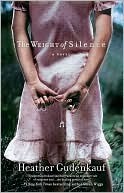
Heather Gudenkauf’s The Weight Of Silence is the story of two missing girls, their desperate parents, and the cop who’s got a past with one of the girl’s mothers. There are multiple points of view, sometimes first person, sometimes third, in alternating fashion. Sometimes we’re in the head of the mother of one of the girls, sometimes the father of the other, sometimes in the head of the missing little girl who hasn’t spoken a word – by choice – in four years. It’s a page-turner, as stories of missing children should be, and it manages an admirable swing at usurping The Poisonwood Bible on my list of favorites, but it’s hard to unseat longstanding victors. TPB is still on the throne.
As a writer, I have a hard time not putting myself in the author’s place and putting my spin on their book. The reader deserves to know why Calli doesn’t speak, and you do find out, but I would have put more emphasis on that scene and actually done some different things with the outcome that I simply can’t say here. Spoilers are for cars.
If you read it and want to know what I would’ve done, holler and we’ll chat. If you like Jodi Piccoult, family dramas, and who-done-its, I think you will like this one.
See you on Friday.

A visit with Elizabeth Musser

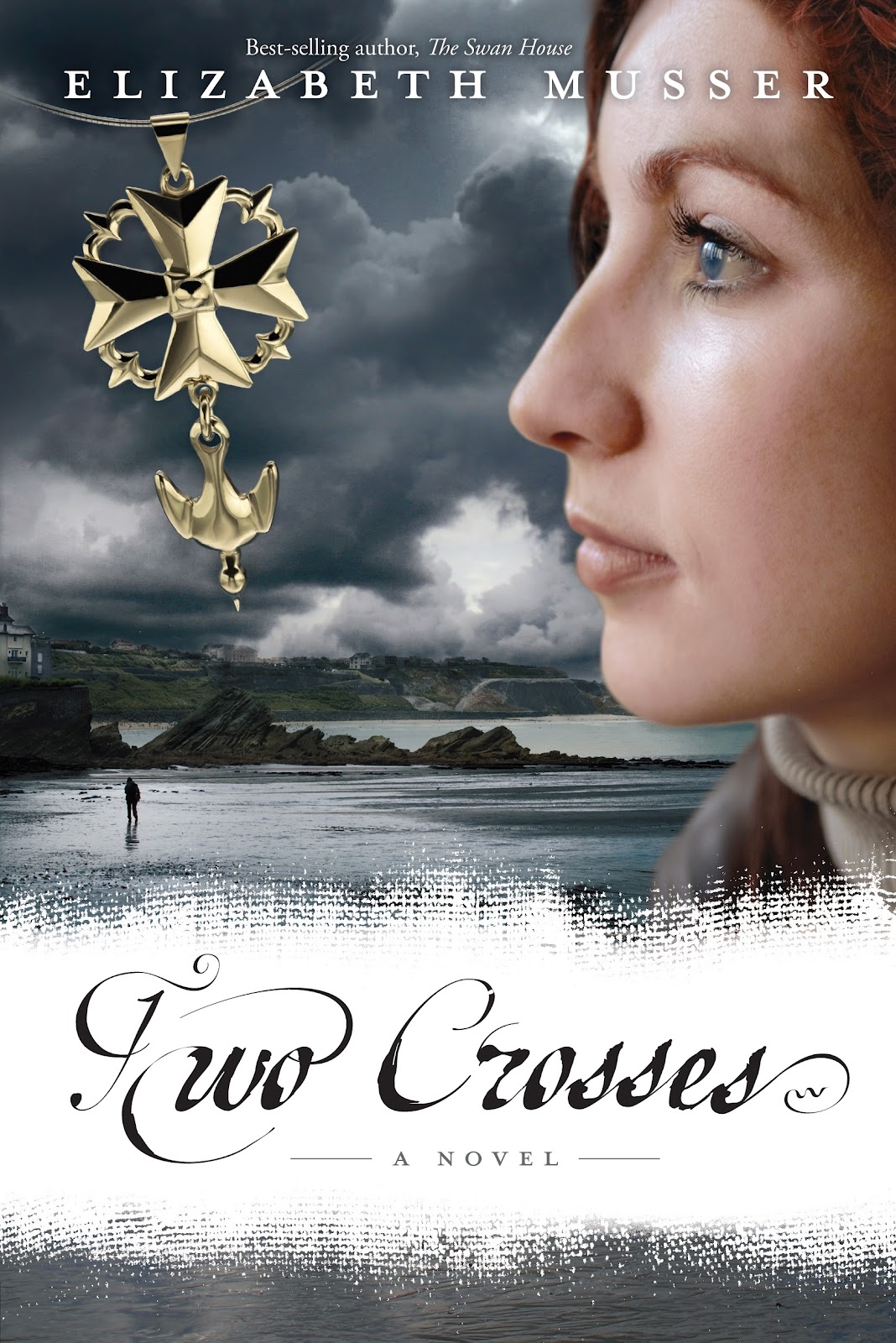
Today on Edgewise, I am so happy to welcome my friend and writing colleague Elizabeth Musser all the way from her home in France. It was my pleasure to read her most recent release, Two Crosses, before it hit bookstore shelves and doubly my pleasure to have her today on the blog to talk about it. Make sure you read all the way to the end to see how to get in on a drawing for a free copy.

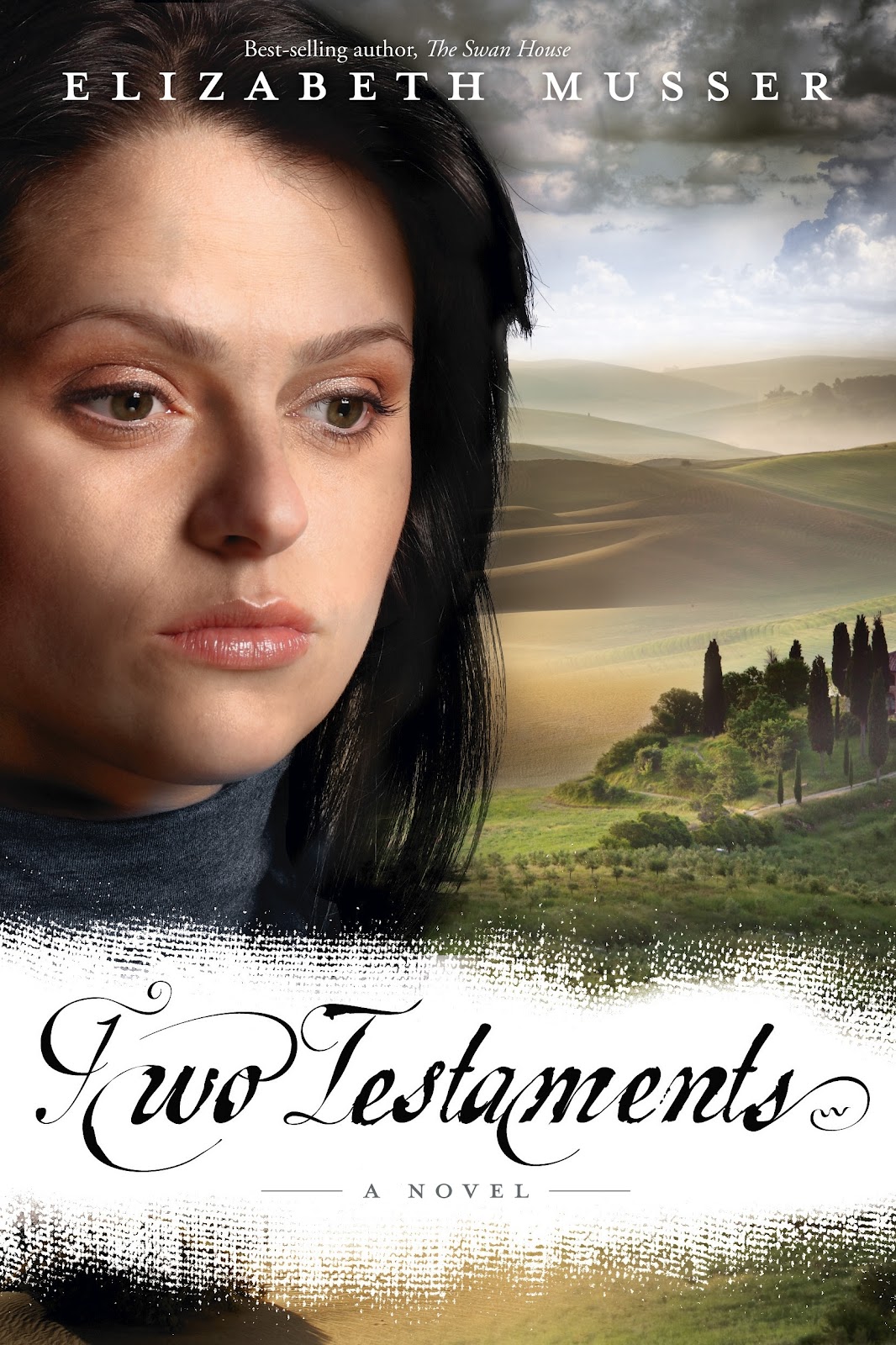
Elizabeth is a Georgia native but lives in Lyon, France, where she and her husband serve as missionaries. A novelist who writes what she calls “entertainment with a soul,” she has authored acclaimed novels including The Dwelling Place and The Swan House, which was named one of Amazon’s Top Christian Books of the Year and one of Georgia’s Top Ten Novels of the Past 100 Years. Look for Two Testaments, her sequel to Two Crosses, in stores now, and Two Destinies, the third book in the trilogy, set for release in September 2012. The Mussers have two sons, a daughter-in-law, and a brand new grandson. Before we start, here’s the story of Two Crosses in a nutshell:

The glimmering Huguenot cross she so innocently wears leads her deep into the shadows. 

When Gabriella Madison arrives in France in 1961 to continue her university studies, she doesn’t anticipate being drawn into the secretive world behind the Algerian war for independence from France. The further she delves into the war efforts, the more her faith is challenged.The people who surround her bring a whirlwind of transforming forces—a wise nun involved in the smuggling, a little girl carrying secret information, and a man with unknown loyalties who captures her heart. When she discovers a long hidden secret from her past, it all leads to questions about trust, faith in action, and the power of forgiveness to move beyond the pain of the past.
Edgewise: Tell us where the idea for Two Crosses sprung from.
Elizabeth: When we first moved to Montpellier, France, as missionaries in 1989, I didn’t even know that Algeria was located just across the Mediterranean Sea from France, but I soon learned a lot about both France and Algeria. The first two books in my Secrets of the Cross trilogy take place during the Algerian War for Independence from France (1957-1962). I chose this setting, knowing that most Americans were completely unfamiliar with that war. Yet daily, the papers were being filled with news of Algeria because of the civil war that was going on in that country. I felt Algeria and France would provide a unique, new setting for a novel. 

Living in the south of France, I also met many people who had lived through the war, either as French citizens, military or Algerians, and interviewed some of them. I was able to visit all the amazing historical sites in France which would be included in this trilogy. What was right before my eyes was more fascinating that anything I could have dreamed up! I decided to weave some of the French Protestant history into this series, thus choosing the Huguenot cross as a main symbol.
Another inspiration came from the semester I spent as a student in Aix-en-Provence, France where I discovered a completely new world. Finally, I enjoyed including my love for art and literature in the novel.

Edgewise: If you were to describe the Huguenots to someone, what would you say about them? What do you find inspiring about this culture of people?
Elizabeth: The name Huguenot was given to French Protestants who were influenced by Martin Luther’s preaching early in the 16th century, and who later established a reformed church following the teachings of John Calvin. By the middle of the 16th century, there were about 2,000 congregations and perhaps 1.5 million believers. As the French Protestant church grew it came into increasing conflict with the Roman Catholic Church and the monarchy. The continuing effort to eliminate rather than tolerate these Protestants resulted in a century of bitter persecution and fighting. During the 17th century, many Huguenots were tortured and killed for their faith. Others were forced to abdicate or be imprisoned or worse. Many Huguenots fled to other countries where they were welcomed. As I studied these people, I was especially inspired by their love for Christ and their willingness to suffer for what they believed. They endured terrible persecution, yet most held steadfast to their faith. I include bits and pieces of their stories in Two Crosses. 


Edgewise: Did research for this book take you out of France?

Elizabeth: Only in my mind! It was actually quite dangerous to travel in Algeria while I was writing the trilogy Two Crosses, Two Testaments and Two Destinies (1994-1998) because of the civil war going on in that country. However, there are many Algerians living in France, and especially in the south where I lived and I was able to interview Algerians, French citizens (pied-noirs) who had lived in Algeria until the independence, as well as many missionaries who had served in Algeria and were now living in Montpellier. I researched books, watched documentaries and learned an incredible amount, much of which never made it into the trilogy, but I needed to know the details so that the story was believable.

Edgewise:What’s your typical writing style? Plot and outline or does the story develop as you go?
Elizabeth: I would say that I use a mixture of the two. I usually have a fairly detailed synopsis which includes a pretty good idea of the plot and some sort of outline of the chapters, as well as character sketches of the main protagonists but there is quite a bit of the story that develops and changes as I go along. The characters rarely behave as I had originally planned=)


Edgewise: Did anything happen in the book that surprised you?

Elizabeth: David and Gabby just kept getting into arguments and Gabriella really had a hard time learning to keep her mouth closed!
Seriously, with historical fiction (even recent historical fiction, as this book is) the writer must do extremely careful research. But there is still a large part of the story that is fiction. What surprised me was that after I had written a good bit of Two Crosses, I found newspaper articles that confirmed some of the fictive parts of the story. Truth is truly stranger than fiction! For instance, as I researched espionage tactics, I found out that some of my crazy ideas had actually been used during the war.

Edgewise: Tell us more about the series that Two Crosses is a part of:
Elizabeth: Here is a brief summary of each:

Two Crosses: In late 1961 as Algeria’s war for independence from France is coming to a close, two crosses, symbolic of another time in history, draw together a host of characters in an unforgettable story of love and war, forgiveness and revenge. (Available June 1, 2012)
Two Testaments: In March 1962, as the ceasefire takes effect in Algeria’s war of independence from France, extraordinary circumstances force ordinary people to question their preconceived notions of faith, trust, and control. (Available June 1, 2012)
Two Destinies, set in France and Algeria near the end of 1994, is the story of the persecuted church in North Africa, the terrorist activities in the midst of Algeria’s civil war, the desperate homeless people in France, and courageous individuals willing to risk their lives to help those in need. (Available September 1, 2012)
As I’ve said, these novels are historical fiction and they have quite a history themselves!
The first two books in this series came out in the mid 90’s, but a company buy-out led to a moratorium on adult fiction – thus the third book was never published in English. In spite of that fact, all three books have been best-sellers in Europe. Then in 2010 David C Cook Publishing House contracted the revision and republishing of the entire series.

I find the issues addressed in these novels more timely and relevant to Americans than when I first wrote them. Ever since 9-11, Americans have become much more aware of the Muslim world. In these novels, I tackle faith questions and issues which Americans now read about and see on the daily news.


Edgewise: What do you love most about your life in France? And the least?

Elizabeth: What I have appreciated during our almost 25 years in France is the slower pace of life in this country. Our ministry calling has often been very challenging and stressful, but I have grown to appreciate the French mentality that bigger is NOT better, than Sunday afternoon walks and eating meals together as a family are very important. As I said once, walking to the bread store each day to get your bread and hanging clothes out on a line to dry are not wastes of time!
Oh, by far the hardest is being far away from those we love—our family and friends. Now, even our sons are in the States. Although we raised our two sons in France, they returned to the States for college. Our older son married a wonderful girl and they just had their first child. Being far away from our first grandchild is very hard right now. It never gets easier or less complicated to live in another country.

Edgewise: What has God shown you in your years in France that you probably wouldn’t have learned anywhere else?
Elizabeth: God has shown me that He is enough, and He will provide. I have had to depend on Him in so many ways that I didn’t need to during my comfortable years in America. I’ve learned that inasmuch as I depend on Him in every area of my life, He is faithful to provide: financially, emotionally, spiritually, provide ‘family’ when our family is far away, provide opportunities to share His love to a very doubting society. I love what Psalm 121: 7-8 says “The Lord will protect you from all evil. He will keep your soul. The Lord will guard your going out and your coming in from this time forth and forever.”
I think the person who is the most surprised that I am still in France after 25 years of missions work is ME! I’m a homebody who doesn’t like to take risks. But our great Lord has been faithful to gently push me out of my comfort zone again and again and again so that I cling to Him and trust Him for each new step. It has been a wonderful adventure and I am over-the-top thankful that the Lord has given me two vocations—writing and missions.

Thanks for being here, Elizabeth. Friends, if you would like to win a copy of Two Crosses, just drop a comment here on the blog and make sure you include your email address. Post your comment by midnight on Sunday, July 29 2012, Pacific Standard Time. Winner will be chosen by random,com. U.S. and Canada addresses only, please.
Good Luck!

Foto Friday

I’m at that awkward stage in a book where the end is in sight – less than 20,000 words to go – and yet it also seems just beyond reach. The pace of the story is accelerating, as all stories should at this point, and I feel like a crazed fanatic running to keep up with it. Today, July 13, as I was madly paying bills so that I could get to the writing, I wrote the date on a check and then woefully lamented to my husband, “Ahhh! My mom’s birthday was yesterday and I didn’t call her!!!”

Here’s the thing. My mother’s birthday is June 12, and the very erroneous date my frazzled brain directed my hand  to write on the check. 

Sheesh. Nobody ask me anything important until this book is done.

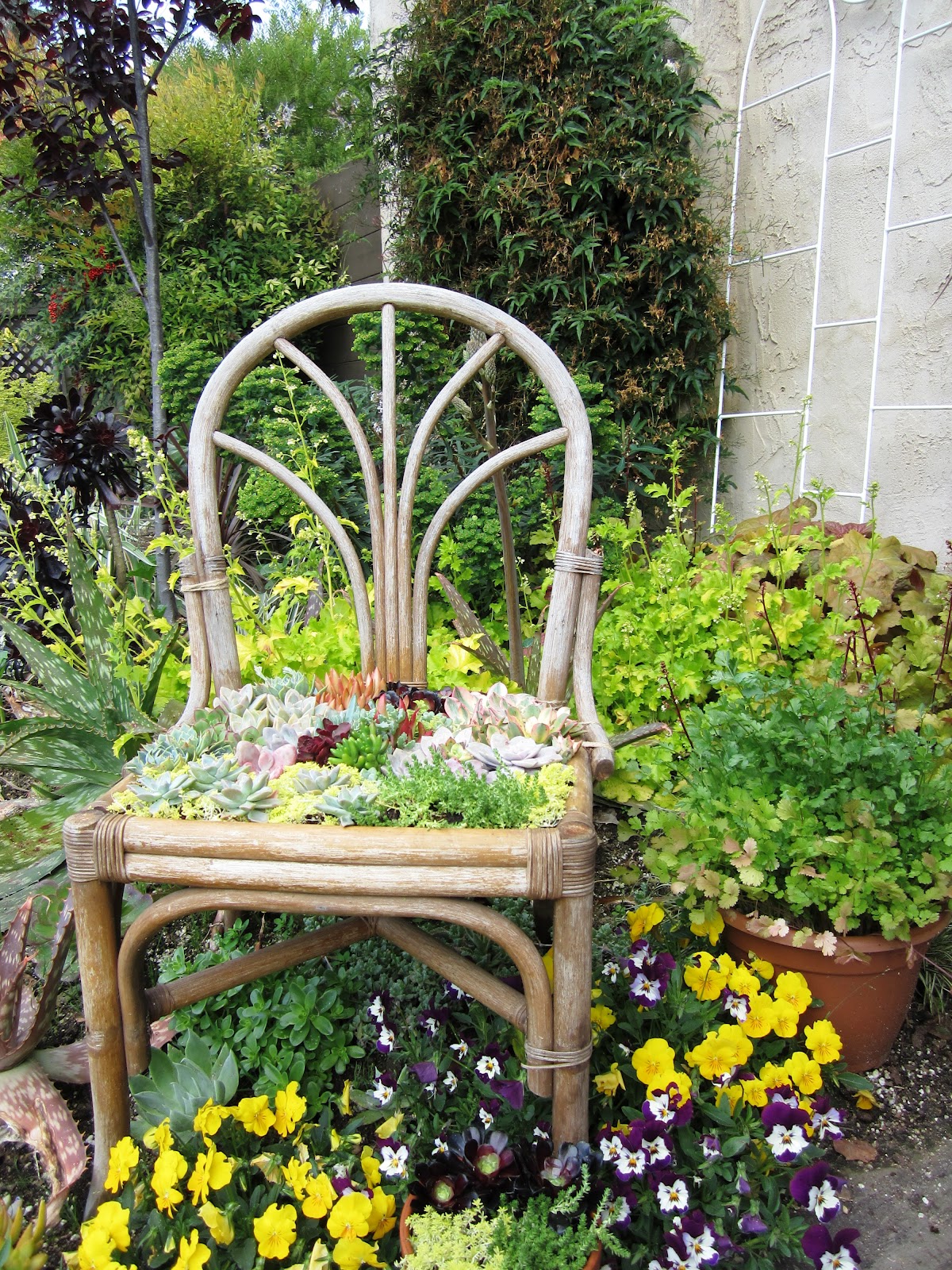
So today, for your viewing pleasure, I thought you would enjoy seeing what my awesome hairdresser has in her front yard. A chair with a succulent seat. Ain’t it grand? Her husband Steve, a whiz with a green thumb, made it. I shan’t go near it until the book is done or I might actually sit on it while calling my big sister to wish her a happy Bar Mitzvah.

See you Monday. Maybe.

Farewell, dear Nora

Lovers of stories everywhere lost a treasured wordsmith this week. Rest in Peace, dear Norah Ephron. Had I the chance to meet you, I would’ve told how much I loved and still love “You’ve Got Mail.” It’s the perfect story. Perfectly flawed characters, struggling with the perfect conflict in the perfect setting. I use it all the time when I teach plot structure. Thanks for all the other great stories you told us. You shall be missed. . . .

“Reading is everything. Reading makes me feel like I’ve accomplished something, learned something, become a better person. Reading makes me smarter. Reading gives me something to talk about later on. Reading is the unbelievably healthy way my attention deficit disorder medicates itself. Reading is escape, and the opposite of escape; it’s a way to make contact with reality after a day of making things up, and it’s a way of making contact with someone else’s imagination after a day that’s all too real. Reading is grist. Reading is bliss.” ~ Nora Ephron, 1941-2012

On Saturday I had the lovely experience of being at the American Library Association’s annual convention in nearby Anaheim. I brought my 27-yr-old daughter with me, a lover of books and an associate editor at publishing house, because a convention floor full of thousands of books and book-loving librarians is an experience meant to be shared.  
I was thrilled to sign and give away 50 copies of the advance review edition of The Girl in the Glass. They went lickety-split!  I had barely sat down at the very lovely Random House booth when the copies were signed and handed to happy librarians. So Stephanie and I had lots of time to saunter (it’s the only time I ever saunter) the aisles of BOOKS!

We also sat in on a Book Buzz presentation by middle-grade authors – they are fun people to be around – and learned that several of them who also illustrate their books would be in the Artist’s Alley on the convention floor, drawing sketches to give away. We enjoyed hearing about their books so much. (Check out The Sisters Grimm!)

After lunch, we headed down to the Artist’s Alley and caught up with Nathan Hale, who authors these amazing graphic novels based on historical events.  It’s simply the best way to  learn history, no matter how old you are.

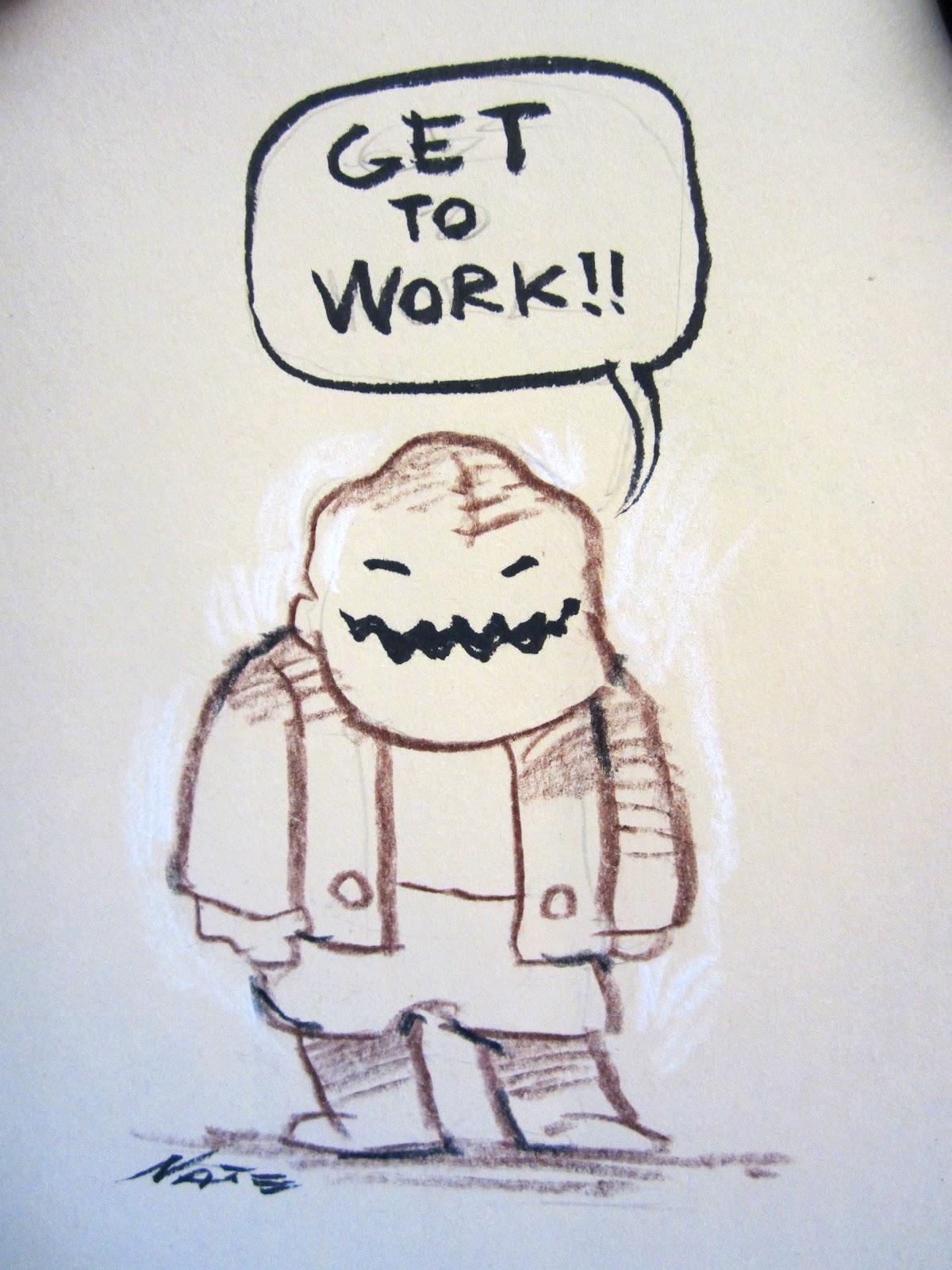
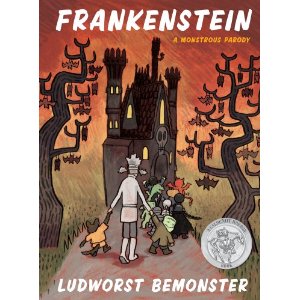
He also illustrated the upcoming parody called Frankenstein (ala Madeline). And while I cringe at some parodies (no zombie Jane Austen for me), this book looks laugh-out-loud cute. He drew me a sketch of Frankenstein and offered to have say something to me! So I instructed Nathan to have the monster tell me to get busy. Writers are such procrastinators…

I love this sketch (above). It shall be framed and placed where I can see it at my writing desk. It will remind me to not only get to work but to not take myself too seriously. Life is more fun if you lighten it up a little.

Have a great week.

Seeing what’s not there

Do you ever have those moments when you read something, and you’re either in a hurry or over 50, and your eyes tell you something that your brain (who should be doing the reading in the first place) knows can’t possibly be true?

I had such a moment earlier this week when I glanced at the subject line of an email and read this sage advice:

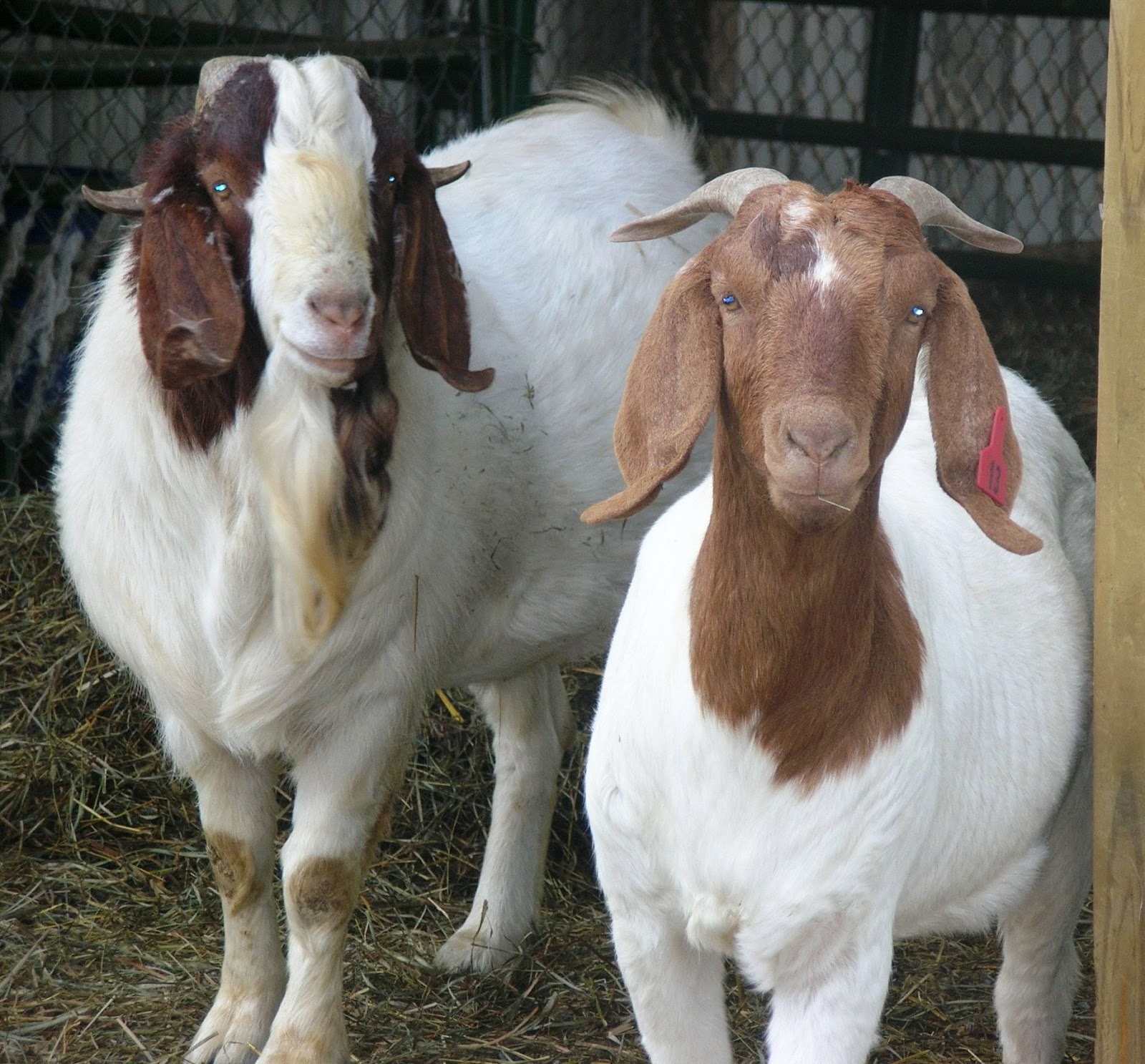
“Achieve your goats.”

I knew within nano-seconds that what it actually said was, “Achieve your goals,” but still, there was a snippet of time – however small it was – when I actually considered changing my agenda for the day and pursuing not just one goat, but goats.

I posted the quirky little moment on Facebook, because that’s what you do these days, and enjoyed hearing comments like:

 I do that all the time. One time I was reading my Bible and I read something about Jesus and the Insurance Representatives. (It really was Jesus and the insurrectionists.)
And

Yes, I read recently in Psalms, “Lord, deliver me from my toes.” 

It’s like our eyes and our brain like to play games with each other and will race to fill in blanks when we’re reading with the speed of kids playing Whack-a-Mole. But in reality it’s not a game. It’s the way we process images -not words. Words are images. Not individual letters. Cambridge University figgered it out. See for yourself:

Aoccdrnig to rscheearch at Cmabrigde Uinervtisy, it deosn’t mttaer in waht oredr the ltteers in a wrod are, the olny iprmoetnt tihng is taht the frist and lsat ltteer be at the rghit pclae. The rset can be a toatl mses and you can sitll raed it wouthit a porbelm. Tihs is bcuseae the huamn mnid deos not raed ervey lteter by istlef, but the wrod as a wlohe.

Amazing it, isn’t?

If you’ve a goat story, I’d love to hear it so we can all share the laugh.

Adn nwo I erally muts be gnoig. Muhc to wrtie tdoay…


L is for the way…E is for email

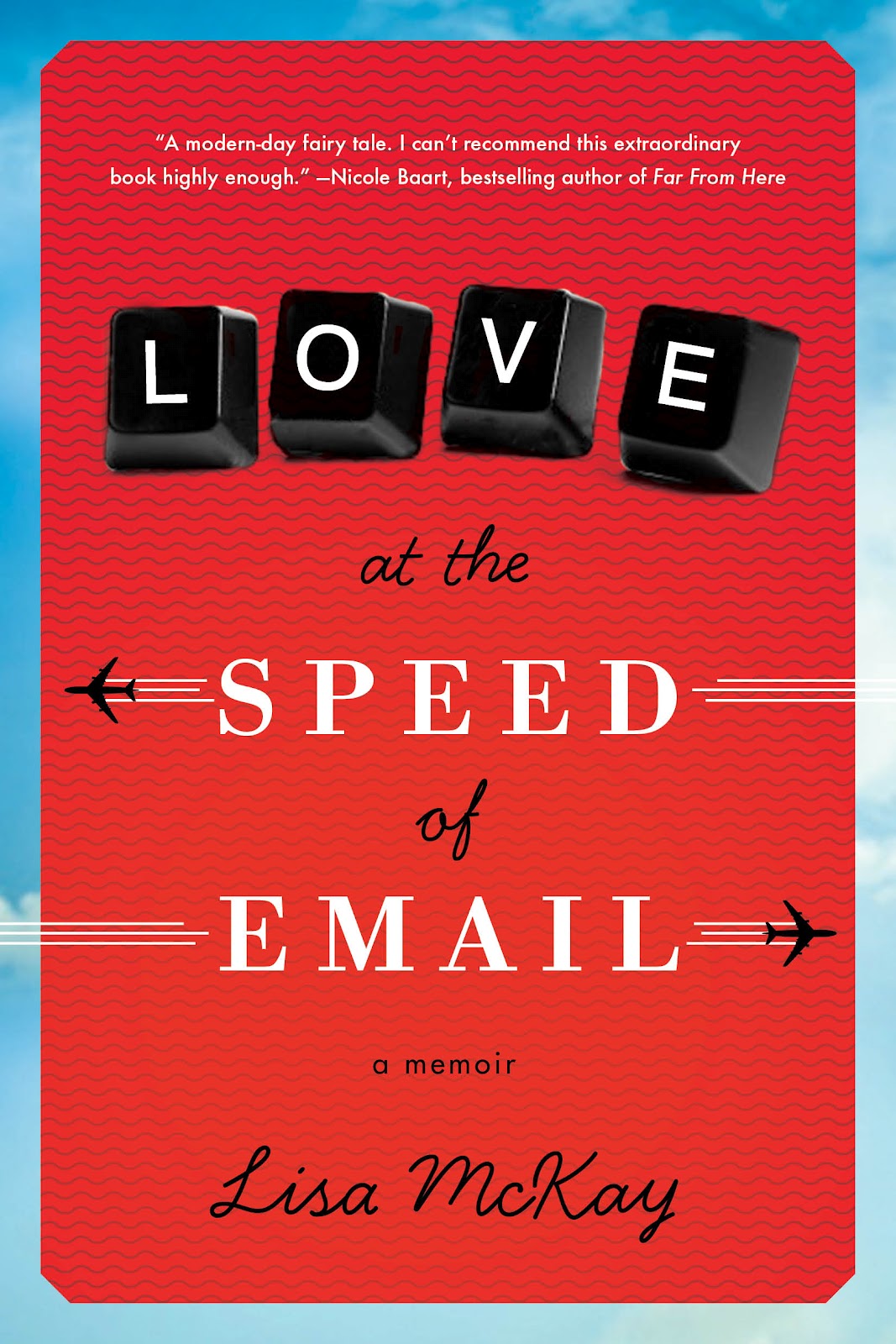
A few years back I met Lisa McKay when her novel My Hands Came Away Red debuted. We struck up a friendship (I loved that book, BTW. And so did the critics. It was a later a finalist for in the 2008 Christys) and I’ve come to admire her many talents, her humor, and her love for people. When she and I and our husbands met for lunch one day, just before they moved to Laos, and I heard the story of how they met and fell in love, I knew it would make a great book! I am so pleased to have her as my guest to talk about Love at the Speed of Email – a modern-day fairy tale that hits the e-book shelves this week.

Love At The Speed Of Email
is the story of an old-fashioned courtship made possible by modern technology. Here’s what the back cover says:
Lisa looks as if she has it made. She has turned her nomadic childhood and forensic psychology training into a successful career as a stress management trainer for humanitarian aid workers. She lives in Los Angeles, travels the world, and her first novel has just been published to some acclaim. But as she turns 31, Lisa realizes that she is still single, constantly on airplanes, and increasingly wondering where home is and what it really means to commit to a person, place, or career. When an intriguing stranger living on the other side of the world emails her out of the blue, she must decide whether she will risk trying to answer those questions. Her decision will change her life. 
Here is the conversation Lisa and I had at the speed of email! 
Your first book was a novel, why did you choose to write a memoir this time around?

I didn’t intend for this second book to be a memoir. In fact, I was working on a novel on human trafficking when my husband, Mike, and I became engaged. But as we began to plan our wedding I found it increasingly difficult to flip in and out of such vastly different worlds – the happiness of the one I was living in and the harshness of the one I was trying to write about.

After months of trying to force myself to persevere with the novel, one day I stopped long enough to ask myself what I really wanted to be writing about. The answer to that question wasn’t trafficking. It was exploring the idea of home.
I’d spent my childhood living in countries as diverse as Bangladesh and Zimbabwe. I carried Australian and Canadian passports. I was living in Los Angeles working for a non-profit organization that provided psychological support to humanitarian workers worldwide. I was hopelessly confused as to where home was. Perhaps, I thought, I could write my way towards clarity. That’s when I started working on the memoir.
What’s the hardest part of taking your relationship, analyzing it, and putting it into a book for all to read?
The hardest part of writing about my relationship with Mike was figuring out what to leave out. We had written each other 90,000 words worth of letters before we ever met, and that was just the start of the raw material I had to work with.
Writing about my previous relationships was harder. One chapter, in particular, I must have rewritten a dozen times. I went over that story over and over again, trying to pin down what had happened during that time and, in particular, my own contribution to the unhealthy dynamics of that relationship.
How did your friends and family feel about appearing in your book?
This was something I was concerned about. It hasn’t happened too much to me (usually I’m the one wielding the pen) but I know it must be a bit weird to have someone else write about you and then put it out there for everyone to read.
I only changed the names of two of the characters in the book, so before I finalized the manuscript I did send it to almost everyone who has a significant “speaking” role with a request to let me know if they had any questions or concerns about the material that involved them. I didn’t give them veto power, per se, but I did want them to see what I’d written and to hear their thoughts.
Funnily enough, a couple of my family members somewhat concerned about how other family members might feel about their portrayal, but no one was concerned with how they were portrayed.
The trickiest part of navigating this issue wasn’t with family; it was with friends and previous boyfriends. However contacting previous love interests to let them know what I’d written about them before I made it public actually proved to be a healing exercise.
In this book you write about “the internal and unwinnable war between the longing for Adventure and Home.” How are adventure and home playing out in your life currently?
When my husband, Mike, heard about this question he joked that he wants Adventure and I want Home. He’s not far wrong, actually. After years of living abroad and traveling the world for work, I am increasingly yearning for a stable community, a white picket fence and an idle passport.
But.
It’s not the season for that quite yet, if it ever will be. We’re currently living in Northern Laos. Mike works for a humanitarian organization here, helping oversee programs related to child and maternal health, food security, education and water and sanitation. I do some work as a consultant psychologist around issues related to stress, trauma and resilience. I do a lot more work as a mother, however. We had our first child just nine months ago and, well, mothering is a bit relentless, isn’t it?
So I’d say Adventure is still edging out Home, but we are managing to create a Home together in some important ways here in Laos.
You spent three months writing letters to your husband before you ever talked or met. How do you think that influenced the way that your relationship developed?
Writing all those letters to each other gave us time and space to ask and answer questions. We wrote about anything and everything during those first months – about childhood and work and what we’re passionate about and the little details of how our days had been and what we were reading …
This helped pace us. It allowed us to get to know one another in a measured, thoughtful, way before anything else entered the picture. It meant that when we finally did meet in person we had a really solid foundation of respect and liking to build upon. I think that three months of writing letters enabled us to learn more about each other than we would have learned if we’d been dating while living in the same city during that time.

You’ve recently become a mother. How has that impacted your writing?


It’s given me a lot more material to work with and a lot less time to do it in (not to mention a brain that doesn’t seem to work quite like it used to).

In all seriousness, motherhood has had a big impact on my writing. I prefer to write in long, quiet, uninterrupted stretches of time (and all of you mothers know that that’s exactly what you don’t have the second you give birth). So I’m doing the hard and painful work of learning to approach writing in a completely new way. I’ve felt way too tired and life-all-turned-upside-down as busy since Dominic’s birth to think about starting another book quite yet. So I’ve been focusing on shorter pieces of writing – blogging and essays.
You’ve chosen to self-publish your book – what sort of hopes do you have for it with the reading public?
I had a great experience publishing my first book with a traditional publisher and I’m excited to explore this new frontier of self-publishing. Technology is changing publishing so rapidly – I find it amazing that I can publish this book and undertake a (virtual) book tour without leaving Northern Laos!!
As for my hopes … I have several. Starting grand: I hope that everyone who reads it loves it and that it sells a million copies.
More modestly (and much more sensibly) I hope that it entertains and I hope that it makes people think. I would love to see this find its way to people who will enjoy a good love story or who are grappling with questions about home, commitment, or long distance relationships.
More modestly still, I hope to sell enough copies to break even on this project. I’d like to earn a living from writing someday and this particular publishing adventure is all part of the process.

Thanks for hosting me on this virtual book tour (isn’t the internet amazing?? I remain astounded that I can launch a book from Laos).


Susan here:  Three cheers for the Internet! So there you have it, readers. If you would like Lisa to visit your blog just let her know. Please do pick up a copy of Love At The Speed Of Email from Amazon or elsewhere or drop by Lisa’s blog and say hello. You might like to know a portion of the proceeds from the sale of the book will be given away to charities Lisa cares deeply about. She’d be happy to tell you more…
Thanks for being my guest on Edgewise, Lisa! All the best to you and Mike and sweet Dominic!

Great book by Ann Tatlock

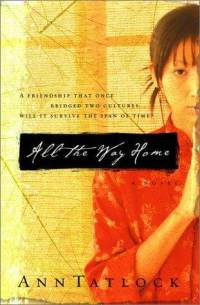
Got a super busy weekend coming up – nephew’s wedding is tomorrow! – so am going to keep this short and sweet. I’ve picked up a few books over the last few months that looked great  cover-wise and premise-wise but which did not come recommended, meaning I bought on looks and premise alone. I have to say I’ve been disappointed going about it that way. Not all books will appeal to all people, I get that. But when someone who likes the kind of books that I like, recommends a book, I usually find myself having lots of happy book moments. There aren’t a whole of disappointments when someone whose opinion I value recommends a book. All that is to say, if you like the kind of books I like, then you will want to pick up a copy of Ann Tatlock’s All the Way Home. It’s a Christy-Award winner, and deservedly so, and sadly out of print. (The cover photo above is from its original print edition and I love it) But you can find it at third-party sellers or in some libraries if you don’t have a Kindle. If you DO have a Kindle, then hop over to Amazon and download it.
The book is about two Los Angeles girls who befriend each other in the pre-Pearl Harbor days of World War II. One girl, Augie, is Caucasian, being raised in a home without love, and the other, Sunny, is Japanese-American. Sunny’s family is the bright and lovely opposite of Augie’s loveless home. She is quickly and warmly drawn in and becomes nearly an adopted member of Sunny’s home. When Pearl Harbor is attacked and the U.S. and Japan become enemies in a terrible war, Sunny’s family faces the fate of thousands of Japanese Americans: interment. The girls are separated when Sunny’s family is interned at Manzanar. And despite their promises to stay in touch, forces work against them. They don’t see each other again for another twenty-five years, and when they finally do, the backdrop is not World War II, but the Civil Rights movement in the Deep South.
I won’t share more and spoil anything, but if you liked The Hotel on the Corner of Bitter and Sweet, you will like this one, big time.
Hope you have a great weekend.

I plan on eating cake.

Notes from the past


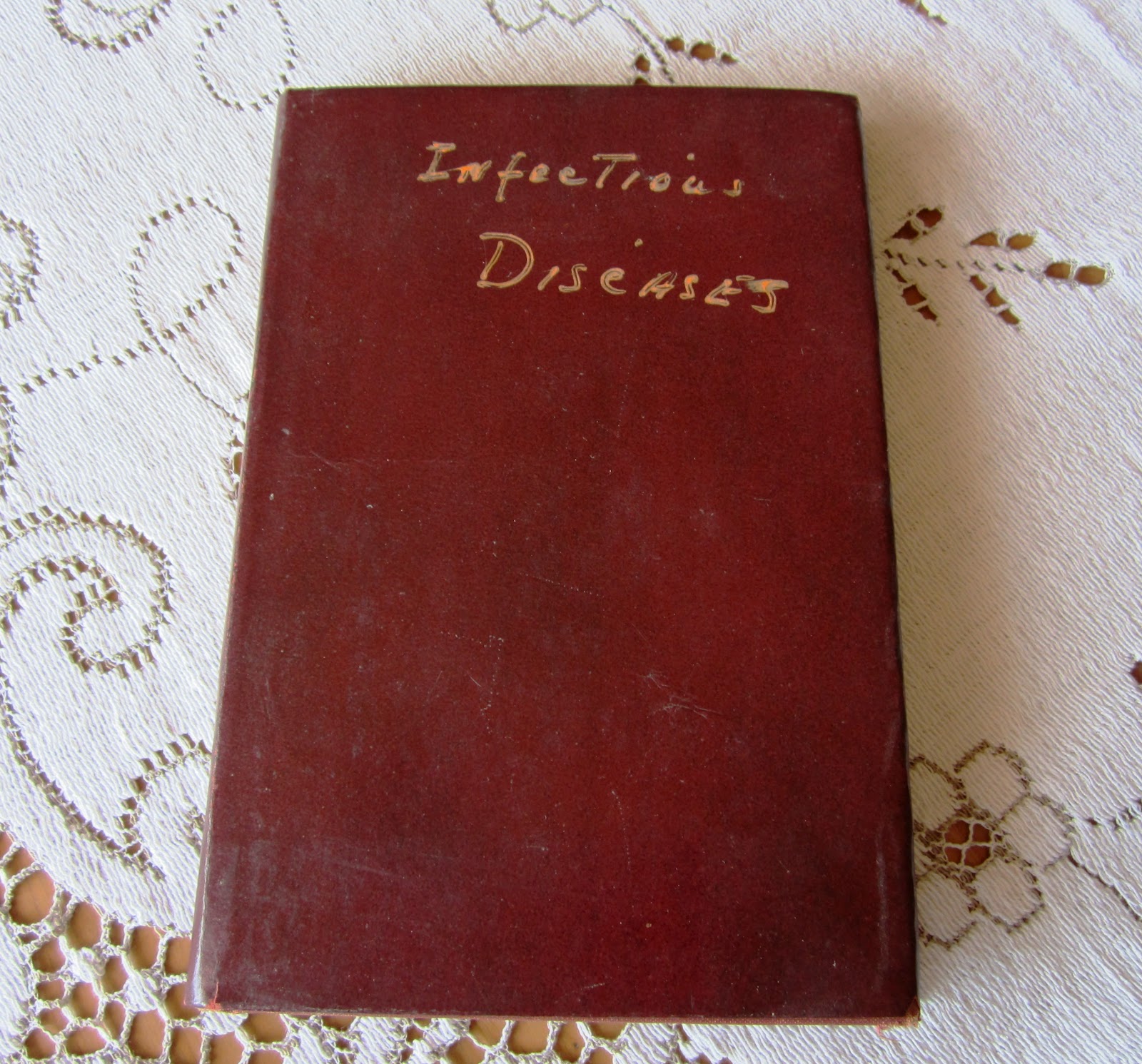
One of the joys of writing historical fiction is getting to play in the sandbox of the past. With the The Girl in the Glass now in production, I am putting away my Italian Renaissance books and  hunting now for books for the next project, which includes an encounter with scarlet fever circa 1911. So I’ve been traipsing about the Internet looking for used books to take me to the previous century and I came upon this little treasure for a couple bucks. It’s official title is “Infectious Diseases and Aseptic Nursing Technique – A Handbook for Nurses,” by Dennett L. Thompson, M.D. Its copyright date is 1927, so a few years off my target date, but not a bad place to start. 

The cool thing about this book is its homemade cover; you know, the kind you put on your textbook when you are at a school where the books for class are not yours and you must cover them or risk eternal peril. I am thinking this little volume made the rounds at nursing schools and its cover, which looks nearly like something from Hogwarts, is the homemade cover one of the students made. Even more intriguing are all the notes inside the front cover. It seems when you passed on the book to the next nursing student, you needed to leave a little note of encouragement. (I wonder if Puss is not a cat, but maybe a misspelling of pus. Thoughts, anyone?).

And here’s the thing that made me chuckle the most. The author, dear Dr. Thompson, dedicated his book on infectious diseases. To his wife.
Now there’s something you don’t see everyday.
Back to the writing and researching…